
You have a choice — real or vegan leather shoes —but what is the difference anyway? Vegan leather is so sophisticated that it can give an almost identical look to the real thing, but some considerations exist. I will address the simple question — is vegan leather real leather — and go a step further, taking a deeper look at this material.
Vegan leather is not real leather but a material made from plant products to look real. Since the 1990s, vegan leather has provided sustainable products, from shoes to furniture, that cost less. Vegan leather is less durable than real leather but more environmentally friendly.
Are you looking for a more sustainable leather product but unsure if it’s worth it? Do you know what vegan leather is made from and why it’s more environmentally friendly? Let’s explore and consider the differences between real and vegan leather.
Is Vegan Leather Real Leather
A vegan leather product is not real leather and is made without any animal products. Vegan leather Is made from many different substances, including:
- Polyurethane (PU)
- Polyvinyl chloride (PVC)
- Cork
- Recycled plastic
- Pineapple leaves
- Apples
What We’ll Explore
- Clearing up Myths & Misconceptions
- History of Vegan Leather
- Is Vegal Leather Real Leather Overview Table
- Vegan Leather vs. Real Leather
- Is Vegan Leather More Durable Than Real Leather
- Is Vegan Leather Better for the Environment Than Real Leather
- Does Vegan Leather Last Longer Than Real Leather
- My Personal Research Into Is Vegan Leather Real Leather
- Helpful Insights Into Is Vegan Leather Real Leather
- Key Takeaways

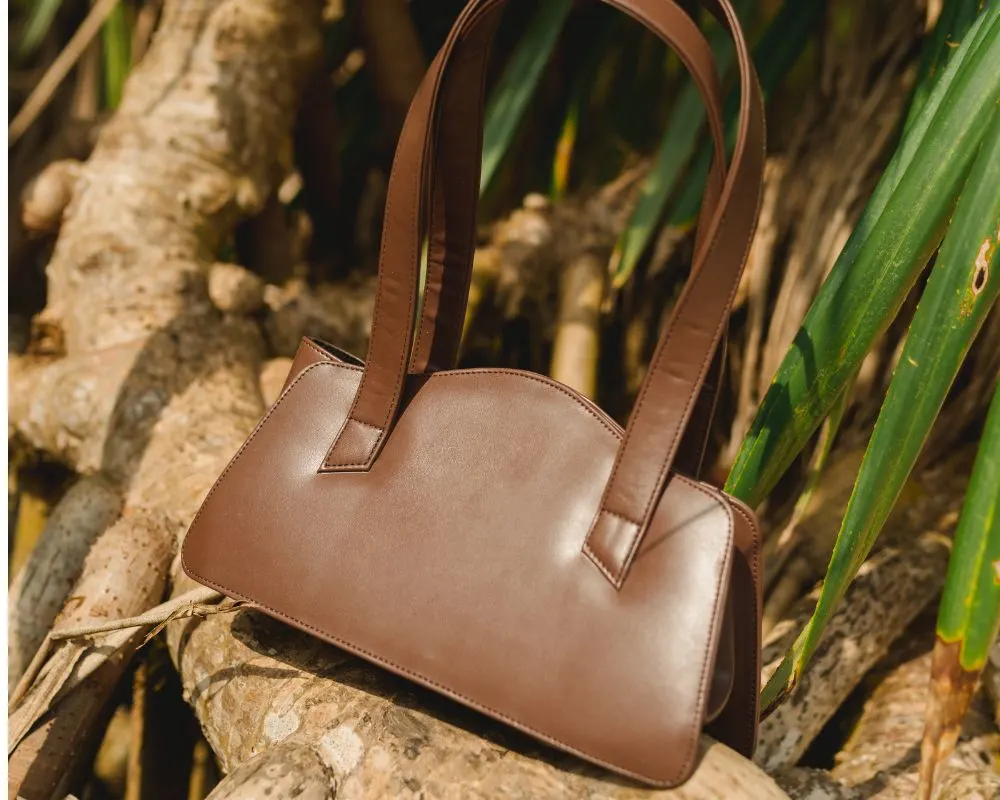
Clearing Up Myths & Misconceptions
One misconception about vegan leather is that it is sustainable. This is partially untrue because the word vegan has been used to describe many different types of faux leather, some of which are not environmentally friendly, and some are not vegan.
A second misconception is that vegan leather is considered leather, but it is not because no animal hide is used in vegan products. Lastly, another myth regarding vegan leather is that it can be just as durable as real leather. This is untrue because nothing will ever compare to the durability of real leather, not even the highest quality vegan leather, although vegan leather still has some durability.
History of Vegan Leather
Faux leather made its debut in the early 20th century and was created with cloth or paper pulp coated with chemicals and pigments to make it look like real leather. It has undergone several different iterations from around 1930–1960.
However, it wasn’t until the 1970s that people started focusing on environmental awareness. This brought on the development of vegan leather around the 1990s, which is still being improved with new and different sustainable materials like plant leaves and cork.
Is Vegan Leather Real Leather Overview Table
| Characteristic | Details |
| Material | Plant products vs. animal products |
| Appearance | Leather ‘look” vs. actual leather |
| Cost | $34 per yard for vegan vs. $50 per yard for real leather |
| Manufacturing | Simple manufacturing for vegan vs. processing and tanning for real |
| Uses | Both vegan and real leather can be used in everything from shoes and handbags to furniture. |
| Maintenance | Vegan leather requires special care to prevent breakdown, tearing, and abrasions, while real leather only requires regular cleaning and conditioning. Real leather is susceptible to water damage. |
Vegan Leather vs. Real Leather
Vegan leather is a very different material from real leather, but let’s look at how they compare through each of their characteristics.
Vegan leather can be made from many different sustainable materials.
Material
Vegan leather can be made from many different materials, including:
- A polyester or cotton base
- PU
- PVC
- Paper
- Cork
- Mushrooms
- Pineapple leaves
- Apple skins
- Other plant materials
Real leather is made from the tanned hides of animals, including:
- Cattle
- Sheep
- Goats
- Deer
- Buffalo
- Alogator/crocodiles
- Equine animals
- Pigs
- Aquatic animals
Appearance
Vegan leather can be made to look just like real leather using plant materials, dyes, chemicals, and a plastic coating. There are no animal by-products in true vegan leather. Real leather will always look like natural leather, but it is not available in as many colors as vegan leather.
Cost
The cost of vegan leather is much less than real leather. A yard of vegan leather can cost around $34, but real leather is about $50 per yard. For example, a vegan leather purse will range between $120–$135 compared to a real leather purse, which will range between $150–$250.
Manufacturing
Vegan leather is manufactured with plant products that are broken down and meshed on top of a base material made of polyester or cotton. Many are coated with a polymer like PU or PVC for durability and water resistance. Real leather must go through processing and tanning to preserve the animal skin.
Uses
Vegan leather is durable enough that it is used for standard pieces, including purses and handbags, clothing, shoes, and furniture. Real leather is also used for many applications but is a better choice for furniture and vehicle interiors.
Maintenance
Maintaining vegan leather includes avoiding water or moisture, conditioning with a leather or faux leather conditioner, protection from temperature extremes, and rotating product use for a longer life. Both vegan and real leather are susceptible to water damage, but vegan leather is less prone to wear because of the plastic coating used.
Watch this helpful video from Gentleman’s Gazette to learn more about the differences between vegan and real leather.
Is Vegan Leather More Durable Than Real Leather
Vegan leather is durable, but not as durable as real leather. Vegan leather is made from many different plant or fabric materials that are dyed and coated to look like the real thing. However, real leather is a solid material that has been processed and tanned to be even more durable and long-lasting.
Is Vegan Leather Better for the Environment Than Real Leather
Most vegan leather is better for the environment than real leather because there are no animal by-products used in their manufacture. They are created from sustainable materials like plant leaves and are of good quality for many uses. The only part of vegan leather that is not environmentally friendly is the PU or PVC used to coat the material, which is not biodegradable.
In comparison, real leather must undergo processing and tanning to preserve the material, including chrome tanning, which is not eco-friendly. Vegetable tanning is better for the environment because it does not use heavy metals or pollutants.
Does Vegan Leather Last Longer Than Real Leather
Vegan leather does not last longer than real leather because it is less durable. High-use vegan leather products like handbags and shoes can be rotated through different pairs to increase their lifespan, but their limit is usually one to two years, even with proper care.
Real leather items can last 20 years or more with proper care, but it isn’t for everyone. Research on Ethical Consumers’ Awareness of Vegan Materials by Choi and Lee found that purchasing faux leather products is often based on social responsibility, animal welfare, and being more eco-friendly.
My Personal Research Into Is Vegan Leather Real Leather
With so many different leather alternatives available, it can be difficult to know which ones are vegan and which are not. I have compiled a list of some popular choices when it comes to vegan leather and what materials they are made from. The great thing is — new vegan leather materials are always being developed!
| Vegan Leather Type | Material |
| Cork leather | Bark from cork oak trees |
| Desserto | Cactus leaves |
| Apple skin | Apples |
| Mycelium leather | Mushrooms |
| Pinatex | Pineapple leaves |
| Vegea | Grape marc (byproduct of wine industry) |
| Lorica | Microfibers |
| Corn leather | Corn |
Helpful Insights Into Is Vegan Leather Real Leather
Does vegan leather last as long as real leather?
Vegan leather does not last as long as real leather. Vegan leather can last one to two years or more based on care and usage, but real leather can last 20 or more years, even with frequent use. However, having multiple vegan leather items can allow for product rotation, which can help with extending their lifespan.
What are the disadvantages of vegan leather?
There aren’t many disadvantages of vegan leather compared to real leather. Vegan leather is usually an environmentally friendly product that costs less; however, it is not as durable or long-lasting as real leather. Vegan leather also does not have the same feel as animal leather, depending on the coating used to protect it.
What is vegan leather made of?
Vegan leather can be made of many different materials and still give a leather look. Some are created with a fabric base from polyester or cotton, then covered in plant materials, including pineapple leaves, paper, cork, or mushrooms that have been processed and dyed to look like the real thing. Some vegan leather is coated in PU or PVC for protection and durability.
Key Takeaways
- Vegan leather is an environmentally friendly alternative to real leather.
- Vegan leather can be made from many different sustainable materials.
- Vegan leather is not as durable as real leather but is a great alternative for many items, including handbags, shoes, and furniture.
In Closing
Vegan leather is a great material with many uses. Although it is not as durable and long-lasting as real leather, vegan leather is more environmentally friendly than real leather, making it an excellent choice for animal lovers and those who want a more sustainable leather item.
The world of vegan leather is still growing and developing more options, so who knows? Maybe someday, there will be an environmentally friendly option just as durable as the real thing!
Other Resources:
- Vegan Leather – An Animal Friendly Alternative
- Artificial Leather – A Surprisingly Useful Alternative
- Faux Leather – Artificial Leather That’s Wildly Popular
- Mushroom Leather – Vegan Leather Made from Mycelium Fiber
- Pineapple Leather – Vegan Leather from Pineapple Fibers
- Leatherette – Its Uses, Costs, and Benefits Over Leather
- Leatherette – The Synthetic Leather Alternative with Style
- Leather and Vinyl – Learn the Difference and Tell Them Apart
- Kombucha Leather – The Biomaterial-Based Vegan Leather
- Eco Leather – Safer and Environmentally Friendly
- Cactus Leather – An Innovative, Vegan Leather From Plants
- Synthetic Leather – What Can Make it a Great Choice for You
- Apple Leather – Vegan Faux Leather With a Natural Twist
- Pleather – Fun Facts, Uses, and Characteristics
- Microfiber Leather – When To Use This Type of Vegan Leather
- Vegan Leather – Excellent Plant and Fiber-Based Materials